This story is about more than a tree. It is about family, memory, food, soil, and the traditions that continue to shape Rogue Rhino Gardens today.
My Grandfather, My Inspiration
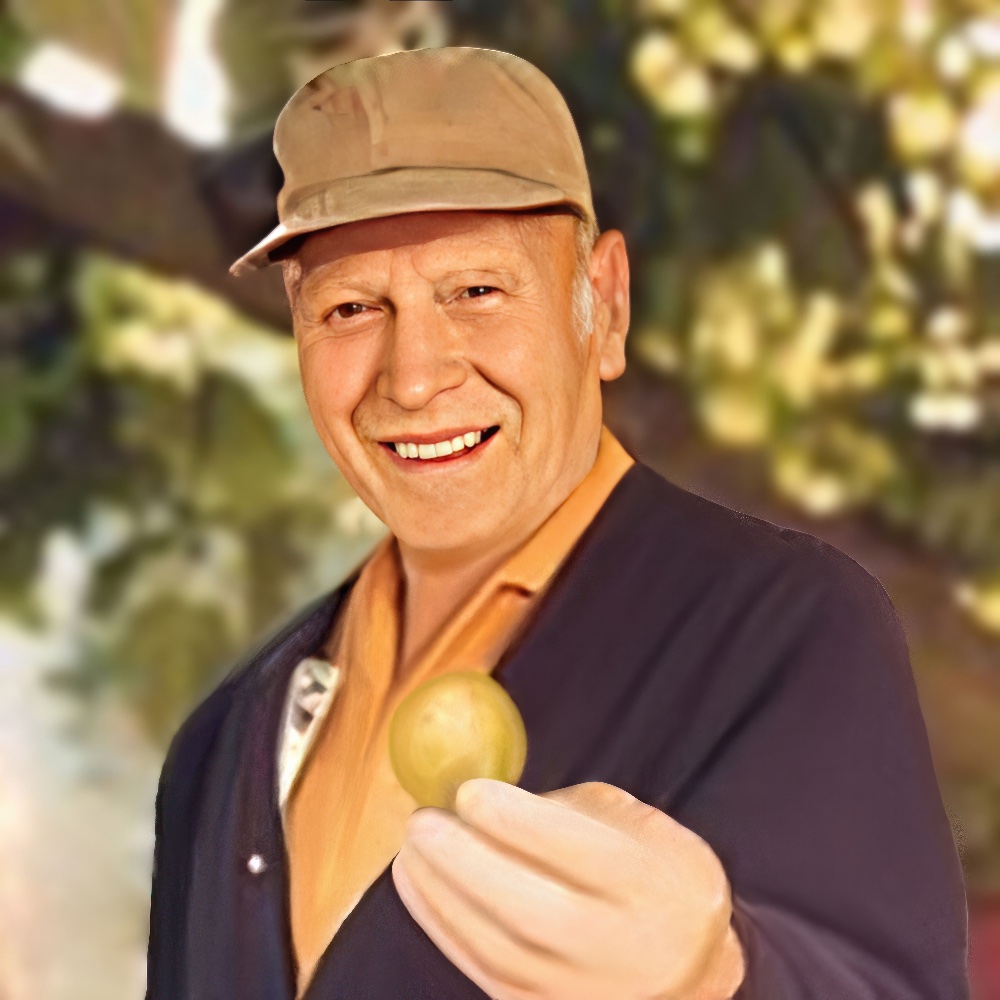
My grandfather, Peter Danna, was a hardworking man who immigrated to the United States when he was only 8 years old. In 1908, he boarded a ship with his aunt and several cousins and headed towards a new life in America. He was one of thousands of Italian immigrants escaping the ‘Old Country' with dreams of a better life. His mother and father were not with him. After going through Ellis Island, my grandfather survived a childhood in the slums of major cities as they worked themselves West, ending up in the apple orchards in Eastern Washington.
As a young man, he learned the 'Old Ways’ of feeding the family. Hunting, fishing and growing your own food. His teachers were his family.
In the 1920’s, my grandfather married, and they moved to Portland, Oregon where they would settle and start a family. He then went to work for Pioneer Fruit, selling and distributing fruits and vegetables. He worked there for many, many years. In the late 1960’s, my grandparents decided to visit the Old Country. They took a train from Portland to New York, boarded a steamship and sailed to Sicily to visit family.
During their visit, he discovered an old fig tree on his family’s property that he had remembered from his youth. He took a few cuttings off the tree and a few from the family’s old grape vines. Knowing that customs in the USA would not let him return with any live plants, his wife Louise slipped the grape cuttings into her wallet and Peter rolled the fig cuttings into his dirty laundry. When they returned to their home in Portland, he successfully grafted both the fig and the grape cuttings into viable vines and trees.
Later, my grandfather’s notoriety in the Fig tree world blossomed amongst the Portland orchard growers and gardeners. He became very popular when he successfully grafted and rooted the little fig cuttings that would become “Pete’s Honey Fig.” This fig tree is prized nationwide and is hailed as a superior fig by gardeners and orchardists across the country. This tree is named after my grandfather, to celebrate his contributions to horticulture in Oregon and our nation.
And, of course I am growing over 20 “Pete’s Honey” fig trees in our gardens and selling many more!
He truly was a great man. He fed our large Sicilian family with his amazing garden, shotgun and clamming shovel. The Grandparents would take the grandchildren hunting every Fall for pheasant and rabbit, in the fields of Oregon. The family structure I grew up in was very traditional, the men hunted, and the women prepared the food. As one of the grandkids, we all worked, and we loved it!
Summertime meant razor clamming. Razor clamming is an art form not for the weak. As a child I could read a tide book long before I could even comprehend a schoolbook. We had a special location on the Washington coast that had huge clam beds. Depending on the times of the minus tides, we were out of bed early in the dark mornings, freezing and wet. Summers on the Washington coast is not what you call swimsuit Summers. As kids we worked. I was the youngest of the boys, my big brother was the first male born in the family, that’s a big deal in the Sicilian world. I felt fortunate that I was out clamming on the beaches. For my little Sister and Cousin Lynn, hung with Grandma and they would end up cleaning several hundred clams, for hours upon hours. It would take them the whole day after we returned, depending on our catch. As boys we were taught to respect the ocean for it could take our lives easily. We would face the ocean with clam shovels as our swords and buckets as our shields. We would do this crazy stomping dance in circles to bring the clams up closer to the surface. There was a special technique to get your shovel into the wet sand only and always the shovel penetrated the sand on the ocean side of the hole, because we believed they, (the clams), could hear us coming! We would quickly scoop out a couple of loads of sand with our shovels and then drop to our knees and force your hand into the cold wet hole, chasing that clam as they dug deeper to escape. You would catch the clam by feel. Remember, this is done in the ocean surf. It was a race and the clams mostly won. The reason they are called razor clams is that the shells are razor sharp, if you hit your fingers on the shell just right it would slice your fingers in the cold salty ocean, we learned how to cuss at a very young age, because it happened to all of us, almost every time out, it was like a rite of passage! But if you could feel that shell you knew you had a chance, for if you could pinch the top of the clam shell it would release the digger foot and you could pull your prize out of the hole, before the next wave hit you! If the clam was too small you had to throw it back into the hole. We were allowed to catch 40 clams a day, for us the men we did not stop until we ALL had our limits plus some. And if the hunt was good, we were told to take our catch up to the cabin, empty our buckets and start over, we only had so much time before the tides would cover the clam beds again. To this day you put a tide book in front of me, I can show you the best times to go clamming, it’s all in the moon. In those days, you would never catch a real razor clammer with a fancy tube gun, that was for the rich folks, and they destroyed more clams than they caught. Hundreds of smallies and keepers are destroyed, for if you missed the hole by as much of an inch or if the clam was sitting sideways the tubes would just mash them to death in the hole. Razor clamming today is mostly done in this fashion, it is such a waste. But who cares, they are only clams! Not what you would call a holistic or a sustainable practice. After a week of clamming, we would head down to Astoria, one of the family worked in a fish cannery and we would pick up cases of canned fish, and a bag of fresh butter clams or oysters. At the cannery we would sit on the pier for lunch eating raw butter clams with a squirt of lemon. Grandpa had fun playing with us, because none of us liked eating the clams raw. He kept a clam knife under the seat of his station wagon, just for this. In the beginning they were horrible, but after a few years they became a delicacy. I have fascinating memories of those days, so many years ago.
Grandma’s and Grandpa’s goal every Fall was to fill the freezer with pheasant and rabbit, in the Spring, we would head to the Sandy River for the annual Smelt run, we would come home with several hundred pounds of smelt. It was a big deal to eat these salty little fish, I hated them as a kid, but fishing for them with giant poles and nets, was truly a blast! As a family unit we were foraging almost every season of the year. For the rest of the season Grandma would be busy canning vegetables and fruits from the garden.
Grandpa was hard of hearing, he had a hearing aid, so when Grandma or the Grand kids got to making too much noise, he would reach down into his shirt and turn off the hearing aid. He would just smile and nod his head; silence was magic to him. Grandma would get so mad, and the yelling, of course it was all in Italian. As kids we didn’t understand the words, but we knew the tone of her voice! All of us kids had huge respect for her, and we feared her. Italian families are very loud, they yell like they love, with passion.
As kids, we played in Grandpa’s Garden when we visited. For me it was such a blessing. Especially if it was grape season, we would all pig out eating his grapes, spitting skins and seeds on each other! Each of the families had gardens and fruit trees as well. Including apple, fig and nut trees. Grandpa planted all our yards. Our apple tree had three varieties of apples. As a kid I thought this was normal. We could truly feed ourselves from our gardens thanks to Grandpa’s knowledge and passion. I love the ways and the traditions of the old families, being self-sufficient, it was the norm and not the exception.
And now after all these years, my life has come full circle. As I plant and reap the godliness of the soils in my gardens. I honor my grandfather’s spirit and his legacy for his contributions to horticulture and gardening in this wonderful country of ours. Pete’s Honey Figs and my passion for gardening are both testaments to the contributions my grandfather left behind.
Thank you for your interest in my inspiration.
Rhino